
Last updated: October 2026
Most people assume that if they own a home, they can pop it on Airbnb. On the Sunshine Coast, that is often not true, and the answer changes depending on which side of the council boundary you are on, what zone the property sits in, and when it first started hosting guests.
We have been through this ourselves. One of our own stays operates under existing use rights. Another went through a full development application with Sunshine Coast Council, which was approved in 2026. This guide pulls together what we learned, plus a lot of reading of council documents, so you can work out where your property stands before you list it, or before you buy it.
Please Read This First
This guide is based on our own research and our own experience as hosts and applicants. It is general information, not legal or town planning advice. Every property is different: your zone, overlays, building approvals and history may lead to a different answer. Rules also change. Please speak with a qualified town planner (and council) about your specific property before you buy, build or list.
The short version
The "Sunshine Coast" is two councils with two very different systems: Sunshine Coast Council and Noosa Shire Council.
In both, renting a whole home to guests for short stays is a land use called short-term accommodation. It is regulated by the planning scheme, not by Airbnb.
On the Sunshine Coast Council side, whether you need a development approval comes down mostly to your zone. There is currently no annual registration.
In Noosa you need two things: planning rights and an annual local law approval, with a 24/7 contact person who can respond to complaints within 30 minutes.
Homes that were lawfully holiday let before the current rules began may hold existing use rights. These are valuable, and they depend entirely on evidence.
If you do need approval in a zone that supports short stays, the pathway is often a code assessed development application. Ours took about three months from lodgement to decision.
Cabins on rural land are their own category, with limits on number, size and setbacks.
Two councils, two systems
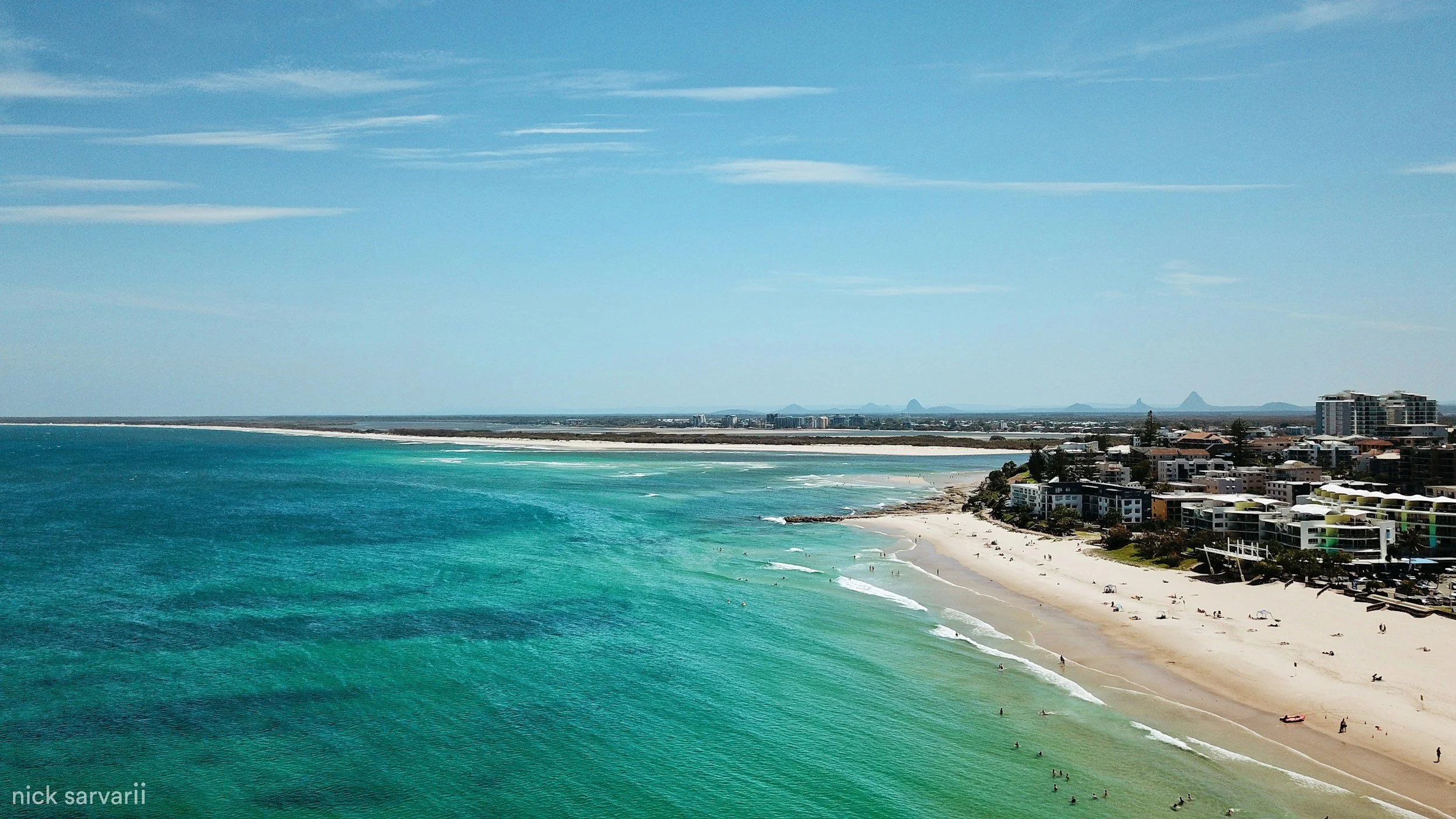
Visitors think of the Sunshine Coast as one place that runs from Caloundra to Noosa and up into the hinterland. For hosts, it is two jurisdictions. Sunshine Coast Council covers Caloundra, Mooloolaba, Maroochydore, Coolum, Mudjimba, and hinterland towns like Montville, Maleny, Mapleton and Kenilworth. Noosa Shire Council covers Noosa Heads, Noosaville, Sunshine Beach, Peregian Beach, and the Noosa hinterland including Cooroy, Pomona and Tinbeerwah.
Sunshine Coast Council regulates short stays through its planning scheme alone. Noosa uses its planning scheme and a dedicated local law on top. Noosa was the first Queensland council to regulate short-stay letting through a local law, back in 2022, and it remains the strictest regime in the region.
Sunshine Coast Council: how the rules work
What counts as short-term accommodation?
Council defines short-term accommodation as residential accommodation for tourists or travellers for less than three consecutive months. Its own information sheet lists motels, serviced apartments, cabins, farm stays and bed and breakfasts, and specifically includes dwelling houses rented out as holiday houses. If you are letting a whole home on Airbnb, Stayz or Booking.com, this is you.
Under the current Sunshine Coast Planning Scheme 2014, switching a home from a normal dwelling to short-term accommodation is generally a "material change of use". Depending on the zone, that change needs a development approval.
Which zones allow Airbnb on the Sunshine Coast?
Council has summarised where the current scheme supports short-term accommodation and where it does not. In plain terms:
| Zone | Is short-term accommodation supported? | What that means in practice |
|---|---|---|
| Tourist accommodation, medium and high density residential, centre zones | Yes | These are the zones intended for visitor stays. A development approval may still be needed, and existing unit complexes often already hold one. Check what your building is approved for. |
| Rural | Yes, with limits | Supported at a small scale (farm stays, or up to eight holiday cabins). Code assessed when you stay within the limits. This is the pathway we used. |
| Low density residential | No | This covers most suburban streets. Short-term accommodation is not an intended use here, so a new application faces a harder, publicly notified assessment and a real chance of refusal. |
| Rural residential | No | Same position as low density residential. Acreage estates are not a short-stay zone under the current scheme. |
You can check your zone and overlays for free on council's mapping tool, and search any address on Development.i to see what approvals a property already holds. Both are worth five minutes before you fall in love with a listing on realestate.com.au.
Can I run a bed and breakfast from my own home?
There is a gentler pathway if you live in the home and host guests while you are there. Under the current scheme, a bed and breakfast is treated as a home based business, not as short-term accommodation, and it is assessed against the Home based business code. That code has additional requirements specifically for bed and breakfasts.
The idea is that the business stays secondary to the home: you live on site, the scale is small, and the impact on neighbours is minimal. A home based business can operate from a dwelling house, dual occupancy or unit, so this pathway can work in residential streets where whole-home holiday letting is not supported. If you are in a complex, check the body corporate by-laws first.
Two cautions. First, this is for hosted stays. Letting the whole house while you live elsewhere is not a bed and breakfast. Second, the proposed new planning scheme would move bed and breakfasts out of the home based business category and into short-term accommodation, as "home-hosted accommodation" under the new Short-term Accommodation Code. Read the current code for the exact requirements, or ask a town planner to check your set-up against it.
Do I need to register my Airbnb with Sunshine Coast Council?
At the time of writing, Sunshine Coast Council does not run an annual short-stay registration or licence scheme like Noosa's. There is also no Queensland-wide register: a state review in 2023 recommended one, but it has not been legislated. Your obligations on the Sunshine Coast Council side come from the planning scheme and from the conditions of any development approval you hold.
That does not mean nobody is watching. Council acts on complaints. If a property is operating without the approval it needs, the usual first step is a letter asking the owner to either stop or apply. Carrying out development without a required permit is an offence under the Planning Act 2016, and ignoring council is an expensive way to find that out.
Is the Sunshine Coast planning scheme changing?
Planning schemes are rewritten every decade or so, and Sunshine Coast Council has drafted a replacement for its 2014 scheme. Until a new scheme formally commences, the 2014 scheme is the one that applies. We update this guide when the rules change, and council's website shows the current status of the new scheme.
The draft gives a good sense of where things are heading. It proposes:
A new Short-term Accommodation Code, with continuous 24 hour management for guest enquiries and neighbour complaints.
Three clearer categories: occasional principal place of residence letting (your own home, no more than four times and 60 nights a calendar year, generally with no approval needed), home-hosted accommodation (you live there while guests stay), and non-hosted holiday houses.
Non-hosted holiday houses in the Rural zone to be code assessable, with no public notification.
Tighter restrictions on cabins on rural properties.
The whole council area to become a "party house restriction area", so any party house use would need a publicly notified application.
If you are planning a short stay that the current scheme supports, it is worth talking to a planner about timing.
Existing use rights: when the old rules still protect you
Planning law in Queensland is generally not retrospective. If a use was lawful when it started, a later change to the planning scheme does not make it unlawful. The use can continue. This protection is called an existing lawful use right, and it runs with the land rather than the owner.
On the Sunshine Coast Council side, the key date is the start of the current planning scheme in May 2014. Council's own material says that before then, a dwelling house rented out as a holiday house did not require a development approval, and that those properties continue to have existing use rights for this form of short-term accommodation. One of our own properties sits in this category.
In Noosa, the equivalent date is 31 July 2020, when Noosa Plan 2020 began.
What do existing use rights depend on?
Evidence. You need to be able to show the property was genuinely let to paying guests before the rules changed. Think booking records, platform statements, agency agreements, tax returns, old listings and advertisements.
Commercial letting, not family holidays. In a 2024 Noosa case (Jephcott v Noosa Shire Council), the Planning and Environment Court found there were no existing use rights where a home had been a private holiday house with occasional stays by friends and family. It had not been let on a commercial basis before the scheme began.
Continuity. The right protects the use as it was. Long gaps, or a much more intense operation than the original, can put it at risk.
Paperwork on sale. If you are buying a property on the strength of existing use rights, ask the seller for their evidence as part of your due diligence. Without it, the right is very hard to prove later.
Council suggests owners contact its planning staff to confirm whether a particular property qualifies. We would add: have a town planner look at your evidence first.
Free download: not sure which category your property falls into? Our Sunshine Coast Short-Stay Rulebook includes a "Can I Airbnb this?" checklist. You will find it at the end of this post.
The code assessed DA: what it actually involves
If your property does not have existing use rights and sits in a zone that supports short stays, the pathway is usually a development application for a material change of use. In supportive zones this is commonly code assessment.
Code assessment means council measures your proposal against the written codes in the planning scheme. If you meet the benchmarks, or can show you achieve the same outcome another way, council is expected to approve it, usually with conditions. Impact assessment is the harder pathway. It involves public notification, formal submissions from the community, and appeal rights for the people who made them.
Do neighbours get a say in a code assessed application?
This is the question we are asked most. With a code assessed application there is no public notification, no formal submission period and no right for neighbours to appeal the decision. The decision notice for our own approval records submissions as "not applicable".
That does not mean neighbours are ignored. They can and do contact council, and in our experience their concerns shape the conditions. Many of our conditions are written around the people next door: a manager contactable around the clock, a sign with a phone number, a complaints register, noise limits. But the decision itself is made against the codes, not by popular vote.
What does the DA process look like in practice?
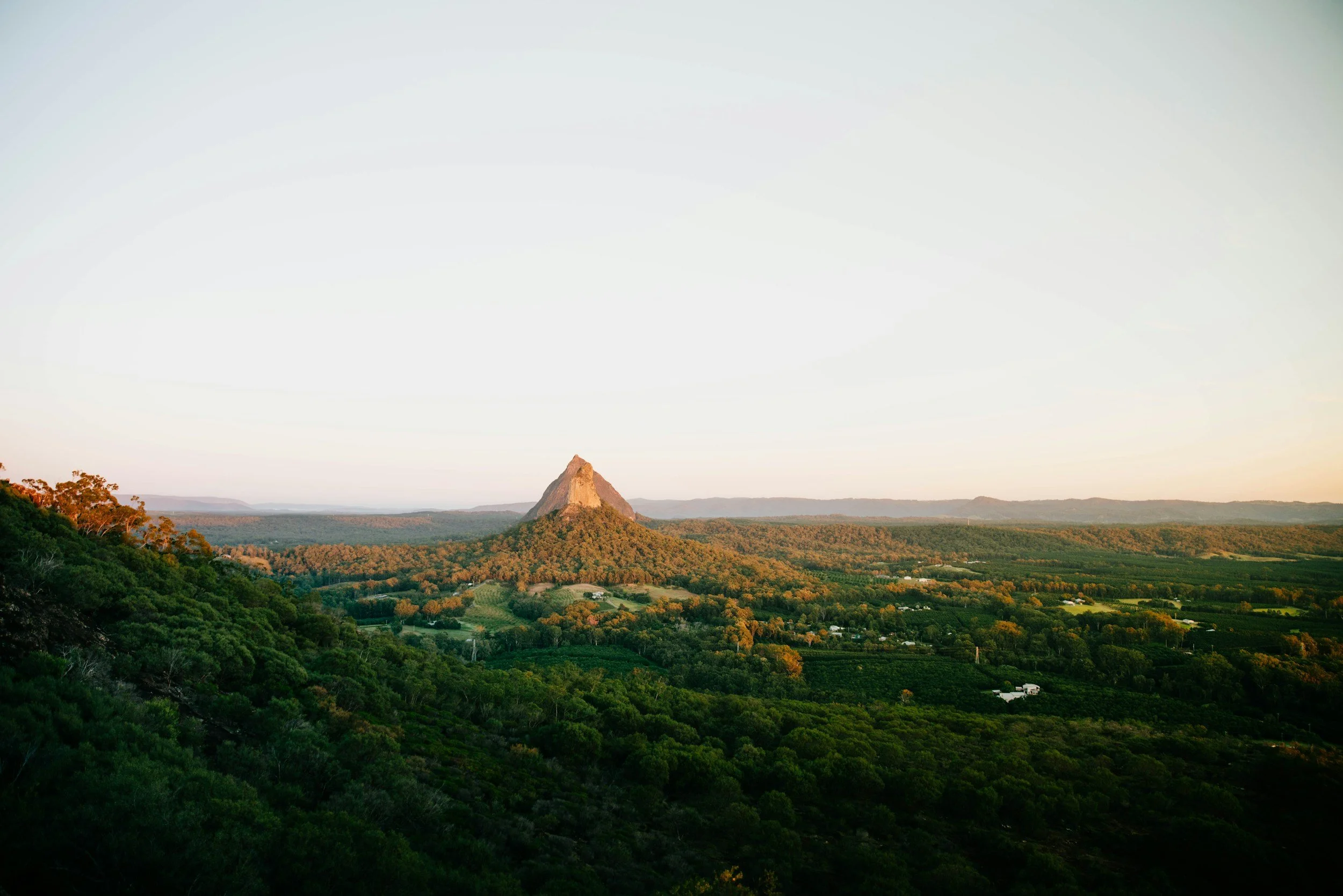
Our hinterland stay sits on about 2.4 hectares in the Rural zone, in an existing building. Here is how the process ran in 2026.
| Stage | What happened |
|---|---|
| Preparation | We engaged a local town planner, who prepared a development assessment report addressing each relevant code, supported by drafted plans of the existing building. We proposed no new structures. |
| Lodgement (April) | Application lodged with Sunshine Coast Council for a Material Change of Use to establish Short-term Accommodation. Level of assessment: code. |
| Referral (May) | A powerline easement crosses the land, so the application was referred to Energex for advice. Their response came back in early May. |
| Decision (late June) | Approved with conditions on 26 June, roughly three months after lodgement. |
| Representations (July) | We asked council to reword two conditions we felt were unworkable. A negotiated decision notice was issued at the end of July. |
Council assessed the application against twelve codes, including the Rural zone code, our local plan code, the Nature and rural based tourism code, and codes for nuisance, parking, waste, stormwater and landslide hazard. That sounds heavy. In practice, because the building already existed, most of the work was showing that nothing new was being built.
What conditions come with an approval?
Stays of no more than 14 consecutive nights, and no permanent occupation.
No functions, weddings, parties or amplified entertainment.
A cap of four guest bedrooms and ten people on site.
A manager contactable 24 hours a day, seven days a week.
Manager contact details given to guests and displayed on a small sign visible to neighbours.
A complaints register, available to council at any time.
A written Operational Management Plan covering outdoor area hours, no fireworks, no portable generators, and a notice to guests that the property has residential neighbours. Guests receive it at check-in.
Two marked car parks, set bin sizes, and service vehicles only between 7am and 6pm Monday to Saturday.
Noise and lighting limits, and adequate water supply and on-site wastewater treatment.
The approval also has a currency period of two years, which means the use needs to be up and running within that window or the approval lapses.
Can you negotiate DA conditions?
After a decision, the applicant can pause the appeal period and make written "representations" asking council to change conditions. You only get one negotiated decision, so it pays to be specific.
We asked for two changes. The first was the wording of a music condition that prohibited any audible noise beyond the boundary at any time, which we felt was impossible to guarantee on a quiet afternoon. Council rewrote it to a reasonableness test, and added a new condition allowing it to require noise testing if genuine complaints are made. The second was the ten person cap, which we asked to apply to overnight guests only. Council left that one as it was.
A fair result, and a useful lesson: read every condition as if a neighbour will read it too.
How much does a short-term accommodation DA cost?
Council's 2026-27 fee register lists the code assessment fee for short-term accommodation as a base of $5,110 plus $555 per bed or unit, with impact assessment at 1.5 times the code fee. A request for a negotiated decision is listed at $1,205 and a one hour pre-lodgement meeting at $1,020. Infrastructure charges can also apply. On top of council fees you will have your town planner, drafting, and any specialist reports.
Cabins on rural land: a different conversation
Putting an existing house on Airbnb and building cabins are treated very differently. Cabins mean new buildings, and new buildings bring more codes, more reports and more cost.
Under the current Sunshine Coast scheme, the Nature and rural based tourism code sets the benchmarks for holiday cabins on rural land:
A maximum of eight cabins on a property, at no more than two cabins per hectare.
A maximum gross floor area of 60 square metres per cabin.
A 50 metre setback from neighbouring rural land.
Guest stays of no more than 14 consecutive nights.
Stay within those limits and the application is generally code assessed. Go beyond them and you are into impact assessment, with public notification. A 2026 example: a North Maleny retreat proposing eleven cabins of about 85 square metres each went to impact assessment precisely because it exceeded the cabin number, size and setback benchmarks.
Expect a cabin project to need more than a planning report. Depending on the site, that can include bushfire, landslide or geotechnical, ecological, wastewater and traffic input, followed by building approval for each structure and infrastructure charges. It is a longer and more expensive road than a change of use in an existing building, and the draft new planning scheme proposes to tighten cabin provisions further.
Noosa Shire: the strictest rules on the coast
In Noosa you need to clear two separate hurdles. First, the property must have lawful planning rights for short-term accommodation. Second, you need an annual approval under the Short Stay Letting and Home Hosted Accommodation Local Law, which began on 1 February 2022.
Where is short-term letting allowed under Noosa Plan 2020?
Noosa Plan 2020 began on 31 July 2020. Amendment No. 2, which took effect on 26 September 2025, tightened the rules further for residential zones. Council's guide to the amendment sets out the position:
| Zone | Your own home, up to 4 times and 60 nights a year | Ongoing short-term letting |
|---|---|---|
| Low, medium and high density residential | Allowed without a planning application, if requirements are met | An inconsistent use. Impact assessment, and unlikely to be supported |
| Rural residential | Allowed without a planning application, if requirements are met | Impact assessment for dwelling lets. Limited cabins or glamping possible on larger sites with an on-site manager |
| Rural | Allowed without a planning application, if requirements are met | Impact assessment for dwelling lets. Small cabin or glamping proposals can be code assessed |
| Tourist accommodation | Allowed | Code assessment. This is where Noosa wants visitor stays to be |
What is Noosa's four times, 60 nights rule?
If the home is your principal place of residence, you can let it while you are away on no more than four occasions and no more than 60 nights in a calendar year, without a planning application. Only one self-contained dwelling can be let at a time, and secondary dwellings (granny flats) cannot be short-term let. You still need a local law approval.
What are the rules for rural Noosa?
In Noosa's rural zones, short-term accommodation must be managed by a full-time resident living on site. Council's guide describes small cabin or glamping proposals as code assessable on sites of four hectares or more, with up to four guest rooms, 200 square metres of floor area and eight guests. Larger proposals, up to 24 guests, are impact assessable.
Do existing use rights apply in Noosa?
Amendment No. 2 is not retrospective, and lawful approvals that existed before it continue. For properties relying on existing use rights rather than an approval, council asks for evidence such as a booking history from before 31 July 2020. As the Jephcott case showed, that evidence needs to demonstrate genuine commercial letting.
The whole of Noosa Shire is also a party house restriction area, and council states that no property in the shire holds existing use rights to host events.
What is the Noosa short stay local law approval?
Every short-stay property in Noosa needs a local law approval unless it is exempt. Exemptions are narrow: sites designated for visitor accommodation only, the Hastings Street mixed use precinct, and motels, hotels and backpackers. The approval is a one-off application followed by annual renewal.
What do you need to apply for a Noosa approval?
Proof of lawful planning rights: a development approval, accepted development status, or evidence of existing use rights.
A site plan and floor plan showing the maximum number of guests per bedroom.
Written confirmation from a building certifier that the premises is lawfully constructed.
Current pool safety certification and electrical safety certification for smoke alarms.
A nominated contact person, and a statement that the property will not be used as a party house.
What conditions apply to Noosa short stays?
A contact person available 24 hours a day, seven days a week, based within 20 kilometres of the property, who responds to each complaint within 30 minutes.
An approval sign displayed permanently at the front of the property, showing council's 24/7 complaints hotline and your approval number.
A guest code of conduct displayed in the property and on the websites used to promote it.
Public liability insurance of at least $10 million.
A complaints register and a guest register, each kept for two years and available to council within five business days.
No camping on the property in tents, caravans or campervans, and bins out for no longer than 24 hours either side of collection.
How much does a Noosa short stay approval cost in 2026-27?
| Approval type | Application fee | Annual renewal |
|---|---|---|
| Short stay letting, house | $1,748 | $800 |
| Short stay letting, unit | $455 | $300 |
| Principal residence (max 4 times, 60 nights), house | $329 | $200 |
| Home hosted accommodation | $329 | $200 |
| Transfer of approval (for example on sale) | $273 | n/a |
Does Noosa Council enforce the local law?
Yes. Council reports that since 2022 it has issued 386 compliance notices and 169 infringement notices, and has fined contact people ($806 each) for missing the 30 minute response window. More than 330 approvals have been cancelled by owners or not renewed. The other side of that story is that 87 per cent of short-stay properties have never received a complaint. Well-run stays are the norm.
What about home hosted accommodation in Noosa?
If you live on site while guests stay, such as a bed and breakfast or a room in your home, Noosa treats it as a home-based business. No planning application is needed if you meet the accepted development requirements of Noosa Plan 2020, but you still need a local law approval and annual renewal.
Side by side: Sunshine Coast Council and Noosa
| Sunshine Coast Council | Noosa Shire Council | |
|---|---|---|
| Planning scheme | Sunshine Coast Planning Scheme 2014. New scheme proposed, not yet adopted | Noosa Plan 2020, tightened by Amendment No. 2 (September 2025) |
| Annual registration | None at the time of writing | Yes. Local law approval, renewed every year |
| Suburban homes | Low density residential is not a supported zone | Ongoing letting is an inconsistent use in all residential zones |
| Letting your own home occasionally | Proposed in the draft scheme: 4 times and 60 nights a year | Allowed now: 4 times and 60 nights a year, with local law approval |
| Rural properties | Supported at small scale. Code assessed within limits | On-site resident manager required. Small proposals code assessed on 4 hectares or more |
| Existing use rights date | Before the 2014 scheme began (May 2014) | Before 31 July 2020 |
| Complaint response | Set by DA conditions, typically a 24/7 contact | 30 minutes, by a contact person within 20 km |
| Party houses | Proposed to be restricted across the whole council area | Whole shire is a party house restriction area |
Beyond council: the other boxes to tick
Smoke alarms. From 1 January 2027, all Queensland dwellings need interconnected photoelectric smoke alarms in every bedroom, in connecting hallways and on every storey. Many short stays already need to comply.
Pool safety. A current pool safety certificate is required where a property with a pool or spa is let.
Insurance. Standard home insurance usually does not cover paying guests. You need a policy that covers short-term letting and public liability. Noosa sets a $10 million minimum.
Body corporate. If you are in a unit or townhouse complex, read the by-laws and the building's approved use. The law on whether by-laws can restrict short-term letting is not fully settled, so get advice before you buy.
Building classification. A home is usually a Class 1a building. Larger or more intensive guest use can raise building classification and fire safety questions. A building certifier can confirm.
Before you buy or list: where to start
Find out which council the property is in.
Look up the zone and overlays on the council's online mapping.
Search the address on council's development application register to see what approvals already exist.
Ask whether the property has a letting history that pre-dates the current rules, and whether the evidence exists.
If an approval is needed, book a conversation with a local town planner before you commit.
In Noosa, line up your local law application and your 24/7 contact person.
Sort insurance, smoke alarms, pool certification and your guest house rules.
Free download: we have turned all of this into a PDF, The Sunshine Coast Short-Stay Rulebook. It includes the "Can I Airbnb this?" checklist, a step-by-step DA roadmap based on our own approval, and a Sunshine Coast and Noosa comparison sheet. Pop your email in the form at the end of this post to get it.
Frequently asked questions
Do I need council approval to Airbnb my house on the Sunshine Coast?
Often, yes. Under the Sunshine Coast Planning Scheme 2014, letting a whole home to short-stay guests is short-term accommodation, and whether it needs a development approval depends on your zone and whether the property has existing use rights.
Can I Airbnb a house in a normal residential street?
On the Sunshine Coast Council side, low density residential is not a zone where short-term accommodation is supported, unless the property holds existing use rights. In Noosa, ongoing letting in residential zones is an inconsistent use, but you can let your own home up to four times and 60 nights a year with a local law approval.
What about renting out a room while I live there?
Hosted stays are treated more gently than whole-home letting in both council areas. On the Sunshine Coast Council side a bed and breakfast is currently a home based business, assessed against the Home based business code. In Noosa, home hosted accommodation is also a home-based business, and you still need a local law approval.
How long does a development application take?
Ours took about three months from lodgement to decision, plus another month to negotiate conditions. Simple applications can be quicker. Anything involving new buildings, referrals or impact assessment will take longer.
Do existing use rights transfer when a property sells?
The right attaches to the land, so it can continue under a new owner, provided the use carries on and the evidence exists. Noosa local law approvals are separate and need to be transferred, for a fee.
What happens if I just list it anyway?
Councils act on complaints. Expect a letter asking you to stop or apply, and enforcement action and fines if you do neither. In Noosa, operating without a local law approval is a breach in its own right.
A final word
None of this is meant to put you off. Some of the most loved stays on the coast went through exactly this process, ours included. The rules reward owners who do their homework and run a considered, well-managed property. That happens to be the kind of hosting we believe in.
A quick note on what we do and do not do. We are hosts, not town planners. Confirming a property's approvals is each owner's own due diligence, and a town planner is the right person to liaise with council on your behalf. Once that side is sorted and you would like help bringing your stay to life, get in touch at hello@gatherandcohosting.com.au.
Disclaimer
This article reflects our own research and our personal experience as hosts and applicants, current to October 2026. It is general information only and is not legal, planning, financial or tax advice. Your property and circumstances may differ, and planning rules, fees and council policies change. Before making any decision, confirm the current requirements with the relevant council and consult a qualified town planner about your specific property.
Get the free Sunshine Coast Short-Stay Rulebook
Pop your email in below and the download link will appear straight away. We will also email you a copy.
Sources and further reading
Sunshine Coast Council: Short-term accommodation information sheet (proposed planning scheme)
Sunshine Coast Council: Short-term accommodation, hot planning topics
Sunshine Coast Council: Planning Scheme 2014, Part 5 Tables of assessment
Sunshine Coast Council: Home based business information sheet (Planning Scheme 2014)
Sunshine Coast Council: Home-based business information sheet (proposed planning scheme)
Sunshine Coast Council: Tourism and accommodation (cabin and campsite limits)
Sunshine Coast Council: Development Services fees and charges 2026-27
Sunshine Coast News: Luxury retreat proposal tests planning scheme benchmarks (September 2026)
Noosa Council: Short-term accommodation guide, Noosa Plan 2020 Amendment No. 2
Noosa Council media release: Short-Stay Local Law proving effective (2025)
Short Stay Rules: Queensland overview (state register and smoke alarm dates)